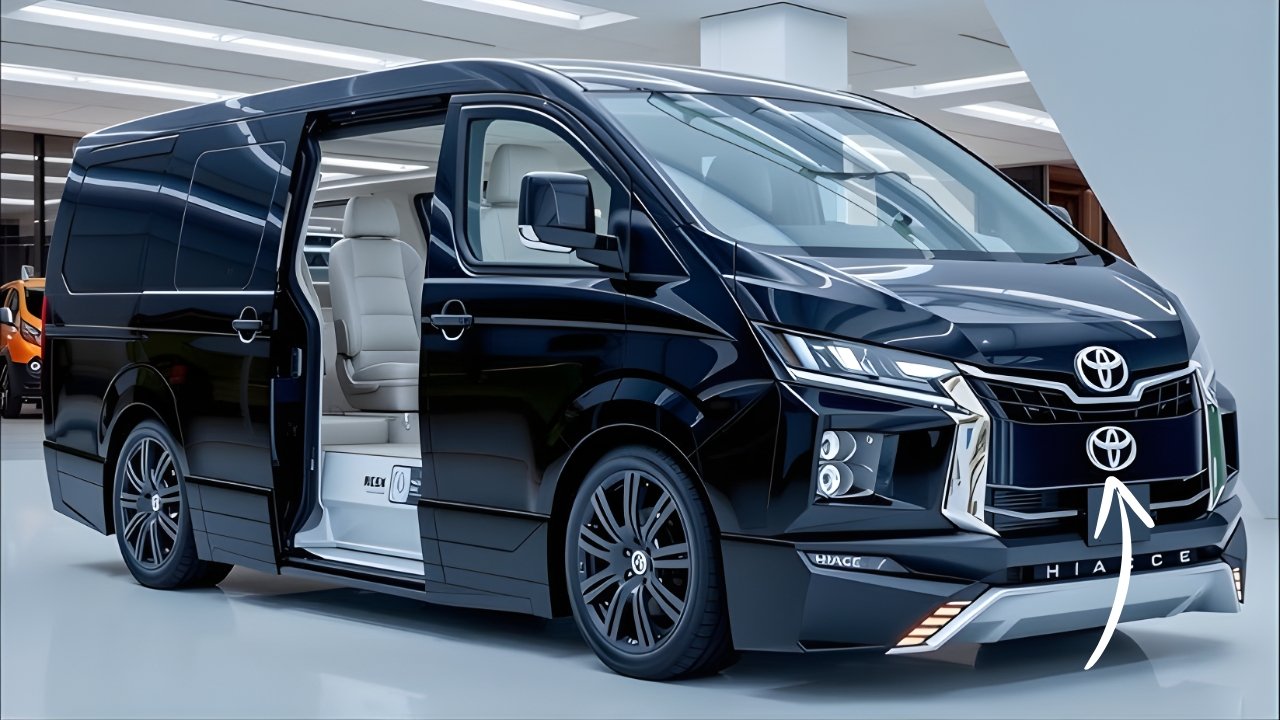
2026 Toyota Hiace : Toyota’s legendary HiAce van enters 2026 with subtle refreshes that keep it the undisputed king of commercial hauling worldwide, sparking buzz in American trade circles about potential imports amid President Trump’s manufacturing renaissance.
This sixth-generation beast, a staple for shuttle services, contractors, and families from Tokyo to Dubai, blends bulletproof reliability with modern touches like updated safety suites and efficient diesel powertrains.
While not officially slated for U.S. roads yet, whispers from Detroit suggest right-hand-drive conversions or NAFTA tweaks could bring it stateside, challenging Mercedes Sprinters and Ford Transits.
Timeless Design Built for Endless Miles
The HiAce’s boxy silhouette endures, stretching 194-231 inches depending on wheelbase, with high-roof variants hitting 9.5 feet tall for standing room in cargo configs.
Sharp LED headlights frame a bolder grille for 2026, while sliding side doors and barn-style rears ease loading in tight urban spots.
Available in panel van, commuter bus (up to 16 seats), or luxury microbus trims, it shrugs off 7,000-pound GVWR ratings with ladder-frame toughness.
Steel wheels (16-inch standard) wrap 215/70R tires; alloys optional on upscale models. Aerodynamic tweaks—active shutters, underbody panels—slice drag, promising 20+ mpg highway on diesels.
Colors like Emotional Red and Platinum White Metallic nod to fleet buyers craving visibility. In America, it’d slot perfectly between Express vans and electric ProMasters, offering unkillable durability for last-mile deliveries.
Painted bumpers and black cladding handle scrapes; roof rails tote ladders or kayaks. It’s no fashion plate—just pure, purpose-built grit.
Powertrains Balancing Thrift and Torque
Diesel reigns: 2.8-liter turbo-four pumps 174 hp and 420 Nm (310 lb-ft), mated to six-speed manual or auto, hitting 0-60 in 13 seconds with 13-15 km/L (30 mpg U.S.).
Petrol fans grab 3.5L V6 (277 hp, 351 Nm) for smoother pulls, though thirstier at 9-11 km/L. Rear-wheel drive standard; no AWD yet, but diff locks aid gravel hauls.
Towing caps 3,300 pounds; payload 2,500-4,000 pounds across long-wheelbase vans swallowing 450 cubic feet cargo. Seven-year battery warranties on mild hybrids (select markets) hint U.S. green incentives.
Real-world fleets log 300,000 miles sans major overhauls—Toyota’s TNGA platform shines. Fuel tanks (18-70 liters) stretch legs; AdBlue cuts NOx for emissions compliance.
Shifting feels truck-tough yet precise; manuals favor purists stacking gears on highways.
Interior Versatility for Work or Wanderlust
Flexibility defines it: stripper vans seat 3 with 200 sq ft load floors; 13-16 passenger commuters pack cloth benches, overhead bins.
Dashboard sweeps wide with 8-inch touchscreen (Apple CarPlay/Android Auto), analog gauges blending digital speedos. Dual-zone A/C chills third rows; fabric seats wipe clean from spills.
Power windows/locks front-only base; top trims add keyless start. USB ports galore charge tablets; optional JBL audio thumps.
Sliding benches reconfigure mid-day—seats stow underfloor for mixed hauls. U.S. buyers would love the school-bus vibe for church groups or contractors ferrying crews.
Ergonomics prioritize drivers: tilt/telescope wheel, supportive buckets for 12-hour days. Noise insulation rivals luxury minivans.
Safety Upgrades Matching Modern Mandates
Toyota Safety Sense 3.0 debuts: pre-collision radar brakes for peds/cyclists, lane trace assist, adaptive cruise holding 70 mph traffic.
Blind-spot monitors ping on slides; rear camera’s wide-angle aids tight docks. ABS, stability control, trailer sway standard; dual front bags, side curtains optional.
Five-star ANCAP holds; U.S. IIHS would applaud 360 cameras on loaded trims. Hill-start assist climbs 30% grades loaded; rear parking sensors chirp early. No frills like night vision, but basics save lives in fleets logging billions annually.
Immobilizers thwart break-ins; geo-fenced telematics track stolen vans.
Pricing, Availability, and Hypothetical U.S. Play
Globally, base vans start $35,000-$50,000 equivalent; 13-seaters $55,000; luxo micros $80,000. U.S. speculation pegs $45,000-$70,000 post-tariffs, undercutting Sprinter $60k+ entries. Built in Japan/Indonesia, 2026 production ramps for NAFTA via Texas ports.
No official U.S. launch, but Trump’s “buy American” flexes import quotas; right-hand conversions for Canada hint left-hand pilots. Leases could dip $600 monthly with fleet deals.
Warranty: 5-year/100,000-mile powertrain, corrosion forever. Competitors eye: Transit lags diesel smoothness; NV high-floor cramps drivers.
Perfect Fit for America’s Hustle Culture
Infrastructure booms demand reliable mules; HiAce’s 99% uptime crushes downtime-prone domestics. Shuttle firms save millions yearly; families haul soccer teams sans breakdowns. Hybrids align EV mandates without range fright.
Rivals flash tech, but HiAce endures—decades-proven where others rust.
The 2026 Toyota HiAce stands unbreakable, juggling payloads, passengers, and profits with effortless grace. Refreshed yet rooted in reliability, it begs U.S. entry to redefine work vans.
Also Read this – $1,000 Stimulus Payment for these Citizens – Check your qualifications
For fleets chasing uptime or adventurers needing space, this global icon delivers where flash fades—pure Toyota toughness for America’s endless grind.